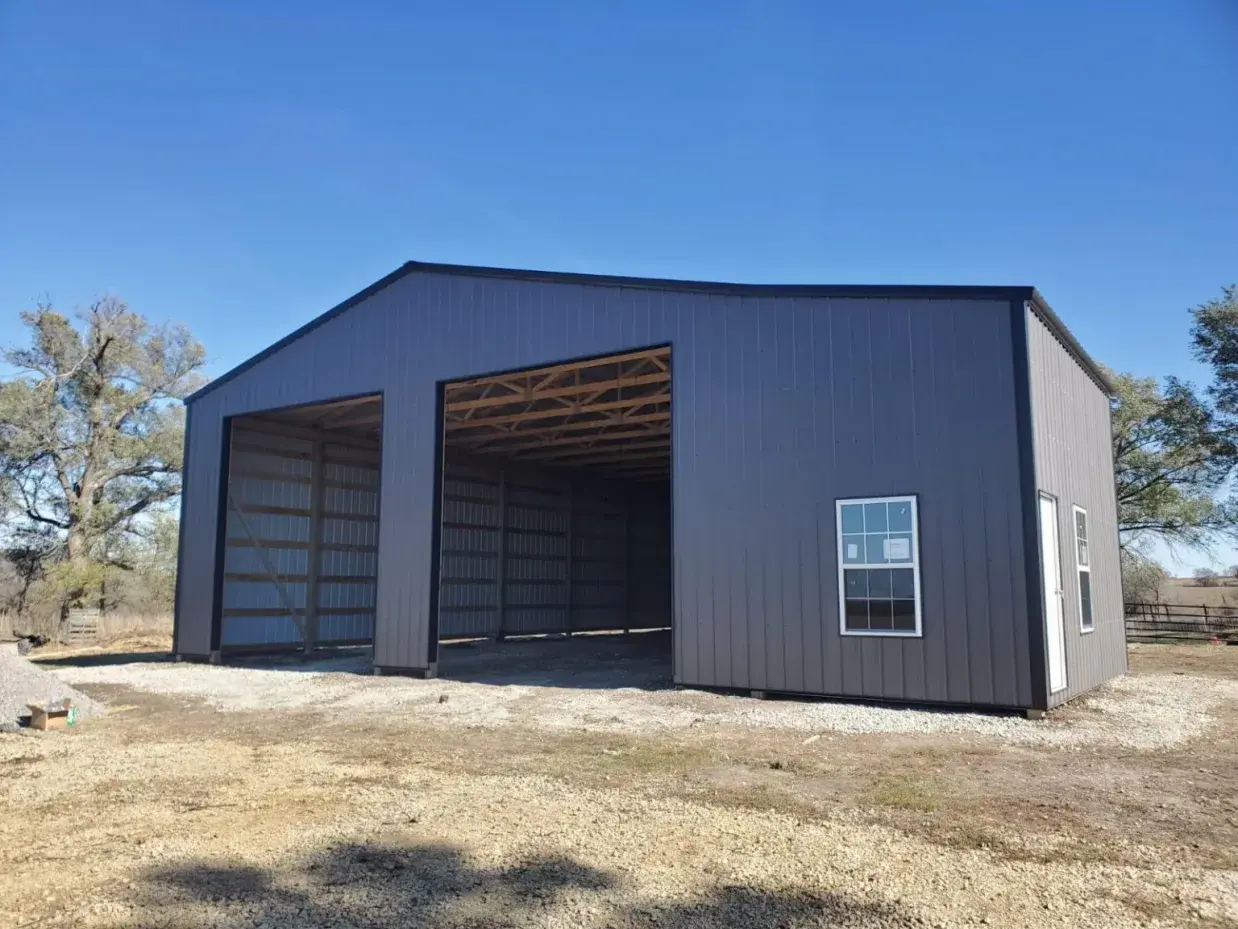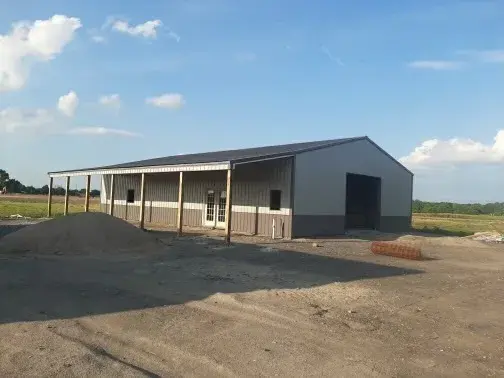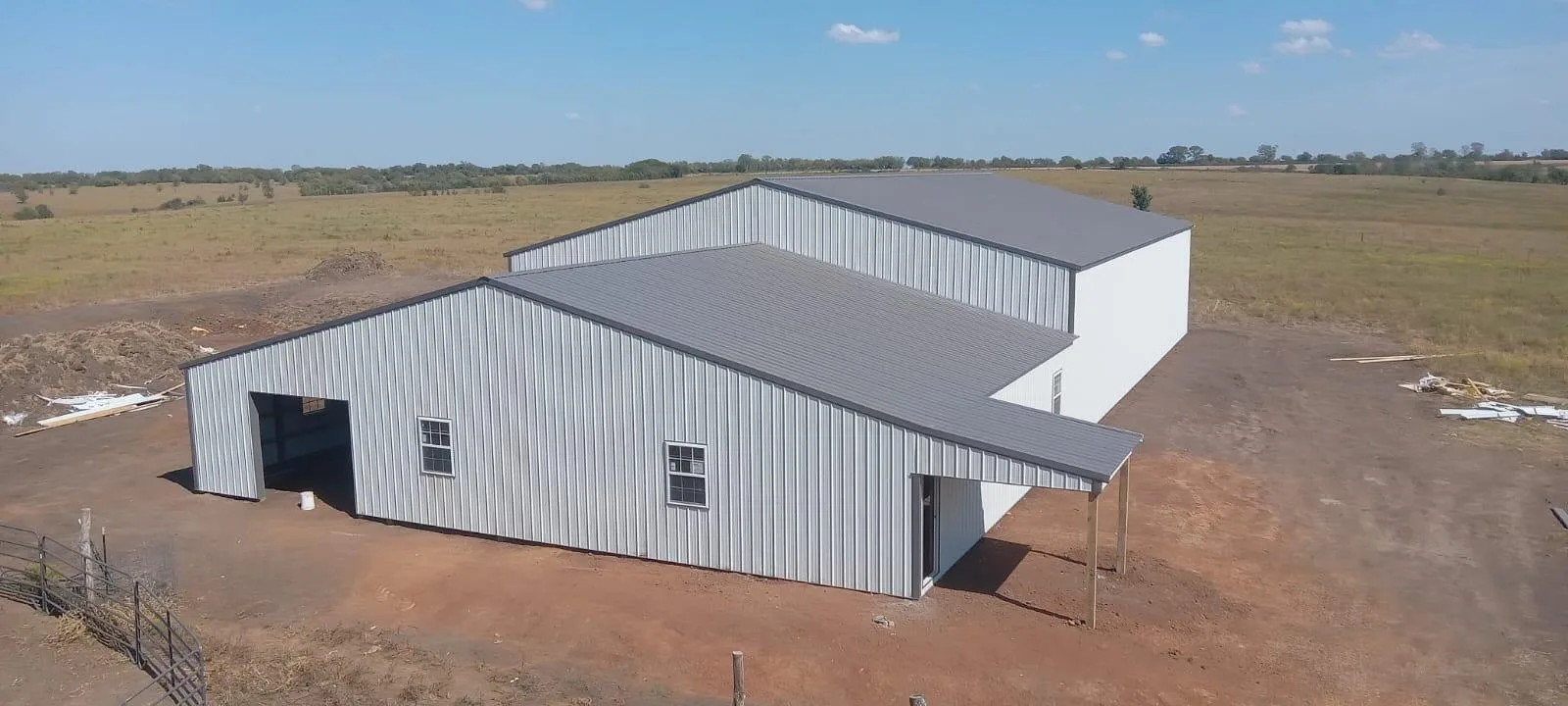
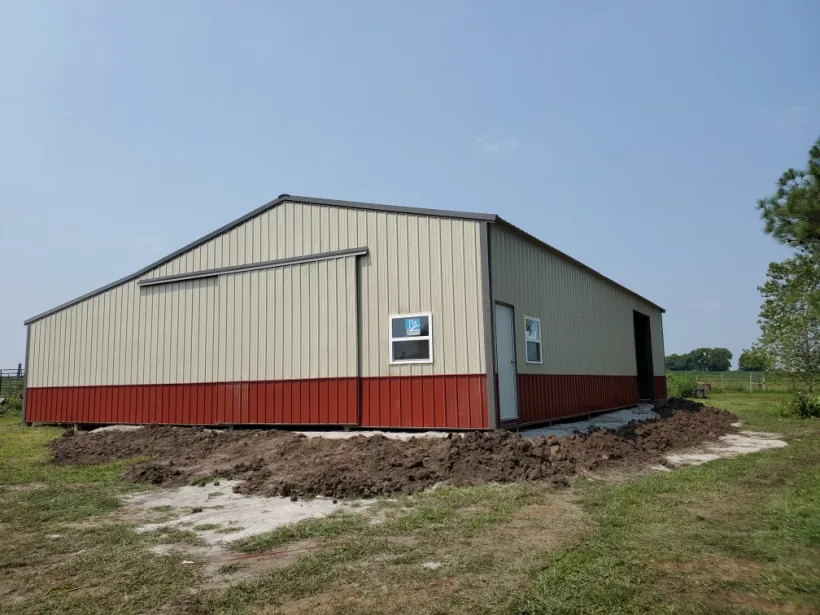
If you have spent any time in Oklahoma, you know how quickly the weather can shift. One day is sunny and calm, but the next might bring strong winds, heavy rain, and sudden storms. It is important to keep these conditions in mind when planning a new pole barn.
No matter if you need an equipment shed, horse barn, hay barn, garage, or workshop, your goal is to build something that fits your property and stands up to the weather. Before you start building, think carefully about the size, materials, roof design, post protection, and where you will place your building.
At D.T. Construction, we have built pole barns and post-frame buildings since 1977, so we know how important the details are. Here are some things Oklahoma property owners should think about when planning a pole barn that can handle wind and rain.
1. Start With a Building Designed for Oklahoma Winds
Strong winds are a major factor when building a pole barn in Oklahoma. Straight-line winds and storms that can produce tornadoes put a lot of pressure on a building, especially when gusts hit the roof and walls from different directions.
This is why your pole barn should be designed for the conditions it will face, not just built to a standard size or look. The structure, post placement, roof framing, and connections all affect how well the building stands up to wind.
It is also important to remember that wind does more than push against the sides of a building. It can lift up on the roof, putting stress on the connections between the roofing, trusses, framing, and posts. These connections need to work together as part of a well-designed structure.
When you compare pole barn builders in Oklahoma, ask how they design for local wind requirements and what structural parts are included in the quote. A low price might seem attractive, but you want to be sure the materials and construction details are right for your project.
2. Pay Attention to Your Roof Design
Your pole barn roof does more than just block the sun from your equipment. It also needs to shed rain, handle wind, and protect everything underneath.
The roof pitch, truss design, roofing materials, and how everything is fastened all affect how well your roof works. If the roof is not designed or installed properly, your building could end up with leaks or storm damage, even if everything else looks fine.
Also consider what you plan to store inside. If you are building a hay barn, keeping moisture away from your hay is very important. If you will store tractors, trailers, or valuable tools, a leaking roof can cause rust, water damage, and repairs you want to avoid.
Discuss the roof design with your builder to make sure it fits your building's size, use, and local rules. You do not need to make the design complicated, but the roof is one place where you should not miss important details.
3. Make Drainage Part of the Plan From Day One
Heavy rain can cause trouble even before water gets to your pole barn. If your building is in a low spot or the ground does not drain well, water can collect around the posts, make access muddy, and make it hard to move equipment in and out.
This is why picking the right spot for your building is so important. Before you start building, watch how water moves across your property during heavy rain. Notice slopes, low spots, driveways, and places where water already collects.
Preparing and grading the site properly can help move water away from your building instead of letting it pool around it. Depending on your property, you might also need extra drainage solutions.
This matters even more if you use your pole barn for farm equipment, livestock, or hay storage. You do not want to deal with mud every time it storms, especially when you need to move a tractor or trailer.
4. Protect the Posts From Moisture and Rot
The posts are a key part of any post-frame building, so it is smart to focus on them when planning your pole barn. While wind stresses the structure, moisture in the ground can cause other problems over time.
Soil near the ground has organic matter that can cause wood to rot. If a post starts to break down where it enters the ground, it can affect the stability of the whole building. Pressure-treated posts made for ground contact are important, but there are other options you should talk about with your builder.
At D.T. Construction, we offer a thick plastic sleeve that keeps the post from touching the soil directly. The idea is simple: keeping the post away from moisture and organic matter helps protect it.
When you get a quote for a pole barn in Oklahoma, ask about the type of posts, how they are treated, and what protection options are offered. It may seem like a small detail, but it can make a big difference over the life of your building.
5. Think About Where the Building Will Sit
You may have a few good spots for a pole barn on your property, but not every location will work the same.
For example, a building in a low area might be convenient, but it could be more likely to have standing water. An open spot might make it easy to get farm equipment in and out, but it could leave the building open to wind from all sides.
Think about the slope of your land, any trees or buildings nearby, driveway access, and how water moves during storms. Also, consider how the big doors will face the weather and if the spot works for your daily needs.
There is no one right place for every Oklahoma property. The best spot depends on your land, your building design, and how you plan to use it. A builder who listens to your needs can help you make a better decision before starting work.
6. Choose Doors That Work for Your Needs
Large doors make pole barns easy to use, especially if you are storing tractors, trucks, trailers, or other equipment. Still, you should pay attention to the doors and their openings when planning for wind and rain.
Think about how you will use the building day to day. You might need a wide opening for machines, a tall door for a camper, or a smaller door for daily use. Each choice should match how you plan to use the space.
Also, think about where the doors will be in relation to the weather. Wind-driven rain can be a problem at exposed openings, so where you place and how you fit the doors matters. Good installation and the right hardware help the doors work as they should.
D.T. Construction has several door options, like sliding, overhead, and roll-up doors. The best choice depends on your building, your budget, and the equipment you need to move in and out.
Instead of picking doors just for their looks, think about how they will work every day and during bad weather.
7. Do Not Overlook the Siding and Fasteners
Metal siding is a popular choice for pole barns because it is practical and comes in many colors. But the panels are just one part of the system. How they are fastened and installed is also important, especially with Oklahoma's wind and rain.
Loose fasteners, poorly fitted panels, and gaps around doors or windows can let water in. Strong winds can also push on the panels, especially if the connections are not right for the building's design.
Ask your builder about the siding and roofing materials they use, and how they fasten them for your project. Make sure you know what is included in your quote, since not every pole barn package uses the same materials.
Remember, no building is completely maintenance-free. Checking for loose fasteners, damaged panels, or leaks after big storms can help you find small problems before they turn into costly repairs.
Build Your Pole Barn With D.T. Construction
You cannot control Oklahoma weather, but you can make smart choices about the building you put on your property. Details like drainage, post protection, roof design, and door placement can make a big difference in how your pole barn holds up over time.
At D.T. Construction, we build custom pole barns, equipment sheds, cow sheds, garages, hay barns, horse barns, and other post-frame buildings for property owners across Oklahoma. We have done this since 1977, and our goal is simple: give customers good value and help them get a building that fits their needs.
If you are planning a pole barn, call or text us at (918) 527-0117 to discuss your project, look at your options, and get a quote. We will help you decide which features make sense for your property and where you can keep things simple without missing important details. Let us build a pole barn that works for you and stands up to Oklahoma weather.